
English| EUR
Suggested for you
More currencies
Choose a language
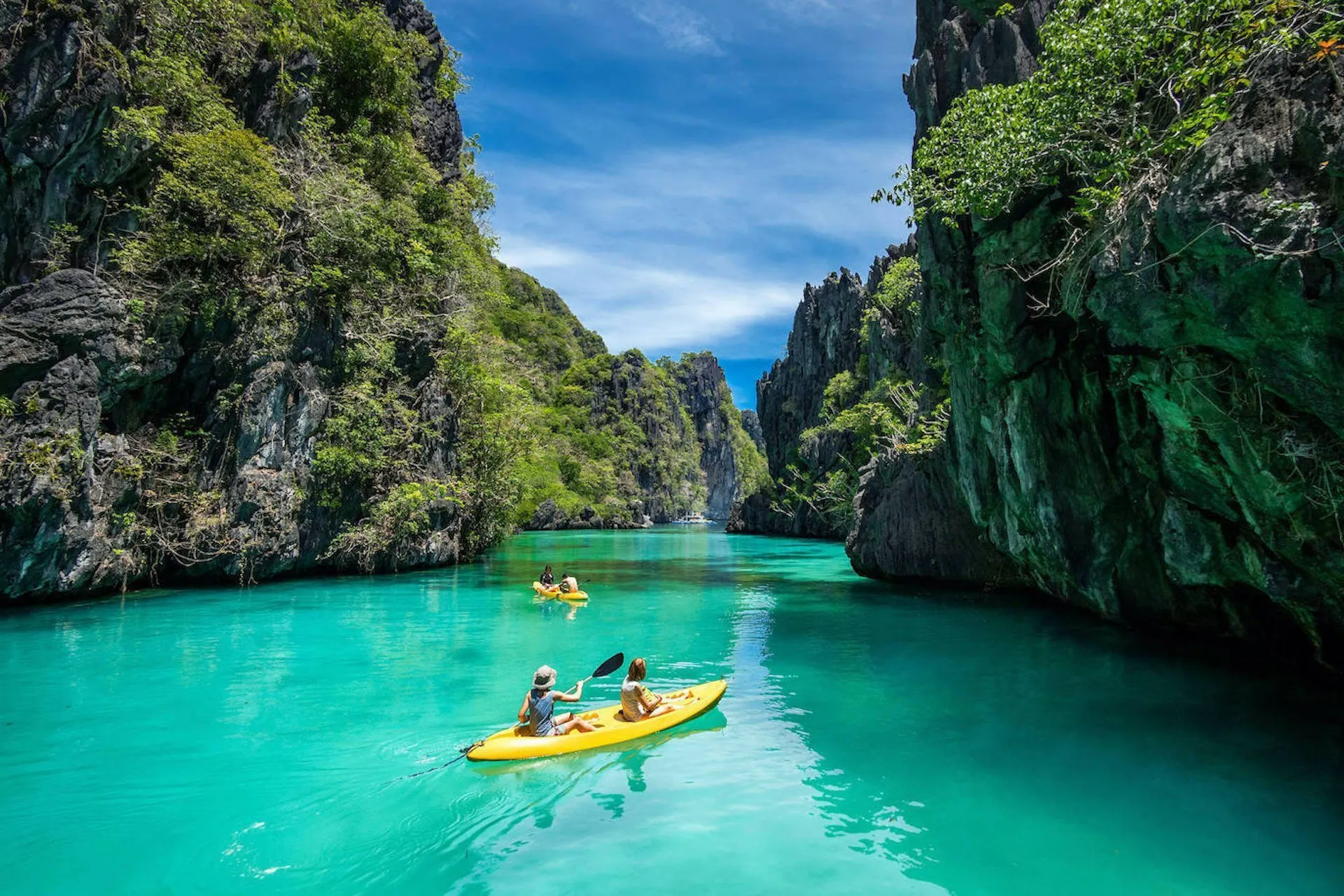
Tour A is El Nido's most popular island-hopping circuit, visiting five signature stops across Bacuit Bay. This itinerary runs 08:00 to 17:00 and covers the Big Lagoon, Small Lagoon, Secret Lagoon, Shimizu Island, and 7 Commando Beach in a carefully sequenced loop designed to dodge crowds and maximize the morning light on the lagoons.
Quick answer
The el nido tour a itinerary follows a five-stop sequence: Big Lagoon (first stop, 45–60 minutes of kayaking), Small Lagoon (30–45 minutes), Secret Lagoon (20–30 minutes), Shimizu Island (snorkeling and lunch, 60–90 minutes), and 7 Commando Beach (final stop, 30–45 minutes). Departures leave between 08:00 and 09:00, with the entire loop lasting approximately eight to nine hours including travel time between islands.
Tour A earns its popularity through a near-perfect balance of geology and accessibility. The circuit threads through the northern reach of Bacuit Bay, where limestone karsts rise vertically from water so clear that the seafloor remains visible at fifteen meters. The route was designed not by tourism boards but by the bay's tidal rhythms and the position of the sun—Big Lagoon is visited first because its narrow entrance catches the best light before 10:00, and because arriving early means paddling through water still undisturbed by the dozen boats that will follow. The el nido tour a itinerary guide begins at the town pier, where outrigger boats depart in waves starting at 08:00. The first leg—a twenty-minute crossing to Miniloc Island—sets the day's tempo. Big Lagoon opens through a cleft in the karst wall; kayaks are distributed here, and the paddle inward takes thirty minutes at a comfortable pace. The water is brackish where rainwater mixes with seawater, creating a thermal layer that shifts visibility. Small Lagoon follows immediately, reachable by a low swim-through passage that requires timing with the tide. Secret Lagoon sits inside Matinloc Island, accessed through a rock crevice that admits only one person at a time. The interior pool is spring-fed and surrounded by vertical walls draped in vines. Shimizu Island serves as the midday anchor. The coral shelf here drops from two meters to twelve in a clean gradient, and the snorkeling window is scheduled to coincide with slack tide when sediment settles. Lunch is served on the boat—grilled fish, rice, fruit, and water included in the standard package. The final stop, 7 Commando Beach, is the tour's only sand landing. The beach stretches two hundred meters and is named for a resort that no longer operates; it functions now as a swimming and photo stop before the return crossing. The tour operator rhythm is visible here: boats arrive in fifteen-minute intervals, discharge passengers for thirty minutes, then depart to make room for the next wave. Every boat follows the same sequence, the same stops, and the same durations, a logistical feat that allows dozens of operators to move hundreds of visitors through five fragile sites without gridlock. The system works because the el nido tour a itinerary has been refined over two decades into a route that respects both the landscape's capacity and the visitor's expectation of beauty delivered on schedule.
“Big Lagoon is visited first because its narrow entrance catches the best light before 10:00, and because arriving early means paddling through water still undisturbed by the dozen boats that will follow.”
This standard full-day route covers the primary stops of Tour A, requiring roughly seven to eight hours from departure to return. It focuses on water-based activities like kayaking, snorkeling, and navigating limestone rock formations.
Gather at El Nido beach for the coast guard clearance and boat assignment. Expect to wait roughly 30 minutes before the outrigger boat leaves the shore.
Transfer into a kayak at the entrance to navigate the shallow channel into the main lagoon. The water is clear, flanked by limestone cliffs, and requires about an hour to explore.
The boat anchors offshore, requiring a short swim or wade to a small hole in the karst wall. Step through the opening to find an enclosed pool surrounded by high rock formations.
Boats typically stop here or nearby for a grilled lunch prepared by the crew. While the food is set up, you can snorkel around the coral reefs just off the beach.
The final stop features a stretch of white sand lined with coconut trees. Spend 45 minutes resting or swimming before boarding for the trip back.
The boat heads back to the main port, concluding the island hopping tour. Disembarkation leaves you on the main beach with plenty of time before evening plans.
The optimal arrival window for an El Nido Tour A itinerary is 08:00–09:00, which allows visitors to reach the popular lagoons before peak daily crowd density. Aligning your trip with the dry season ensures calmer waters and better visibility for swimming and kayaking.
Dry, 25°C–32°C. Ideal for island hopping.
Predictable weather makes this the primary window for tour operations.
Rainy, 24°C–30°C. Occasional storm disruptions.
Expect higher humidity and potential boat cancellations during heavy rainfall.
—
Arriving during the 08:00–09:00 arrival window is essential to access lagoons before peak crowds.
Verdict: The best time to experience Tour A is during the dry season months of March or April, prioritizing an arrival between 08:00 and 09:00 to minimize crowd impact.
Tours in El Nido operate on a consistent daily schedule throughout the week. Visitors planning an El Nido Tour A itinerary can expect standard departure windows during these hours.
Tour A operators handle boat transport and lunch, but visitors must prepare documentation, sun protection, and waterproof storage for personal items.
Everything you need to know about el nido tour a itinerary
The standard route typically features the Big Lagoon, Secret Lagoon, Shimizu Island, and 7 Commandos Beach. These spots showcase the limestone cliffs and turquoise waters characteristic of Palawan. Travelers often spend the day snorkeling, swimming, and exploring these natural formations.
Following the recommended arrival window of 08:00–09:00 is ideal for your excursion. Starting early helps avoid peak crowds at the lagoons, ensuring a more peaceful experience at each stop.
Yes, all visitors must pay the 400 PHP Eco-Tourism Development Fee. This fee is mandatory and remains valid for 10 days for all activities in the region.
The boat trips are generally family-friendly and offer opportunities for swimming and relaxing on beaches. Ensure that life jackets are worn at all times, as currents around the limestone karsts can be unpredictable.
Bring a dry bag, high-SPF sunscreen, a reusable water bottle, and snorkeling gear. A waterproof camera is also recommended to capture the scenery during your time on the water.
The most effective way to manage crowd density is to arrive during the early morning arrival window. Your boat captain may also adjust the order of stops to visit less crowded areas first.
Most group boat trips follow a set route determined by weather and sea conditions. If you prefer a private experience, you may have more flexibility to adjust the duration spent at specific locations.
El Nido Island Hopping Tour A Packages
Read more GuideEl Nido Island Hopping Tours Explained
Read more GuideTravel from El Nido to Puerto Princesa
Read more Tickets & toursEl Nido Tour A Price & Booking
Read more GuideEl Nido Tour A vs Tour C: Which to Choose
Read more Tickets & toursPrivate El Nido Tour A Charter
Read more