
English| EUR
Suggested for you
More currencies
Choose a language
Tour A and Tour C are El Nido's two most popular island hopping routes, each visiting a different set of lagoons, beaches, and snorkeling sites. Both depart from the same town pier, charge the same baseline rate, and run on the same daily schedule—but the landscapes, water conditions, and crowd dynamics diverge sharply. This guide maps the practical differences so you can pick the route that matches what you came to Palawan to see.
Quick answer
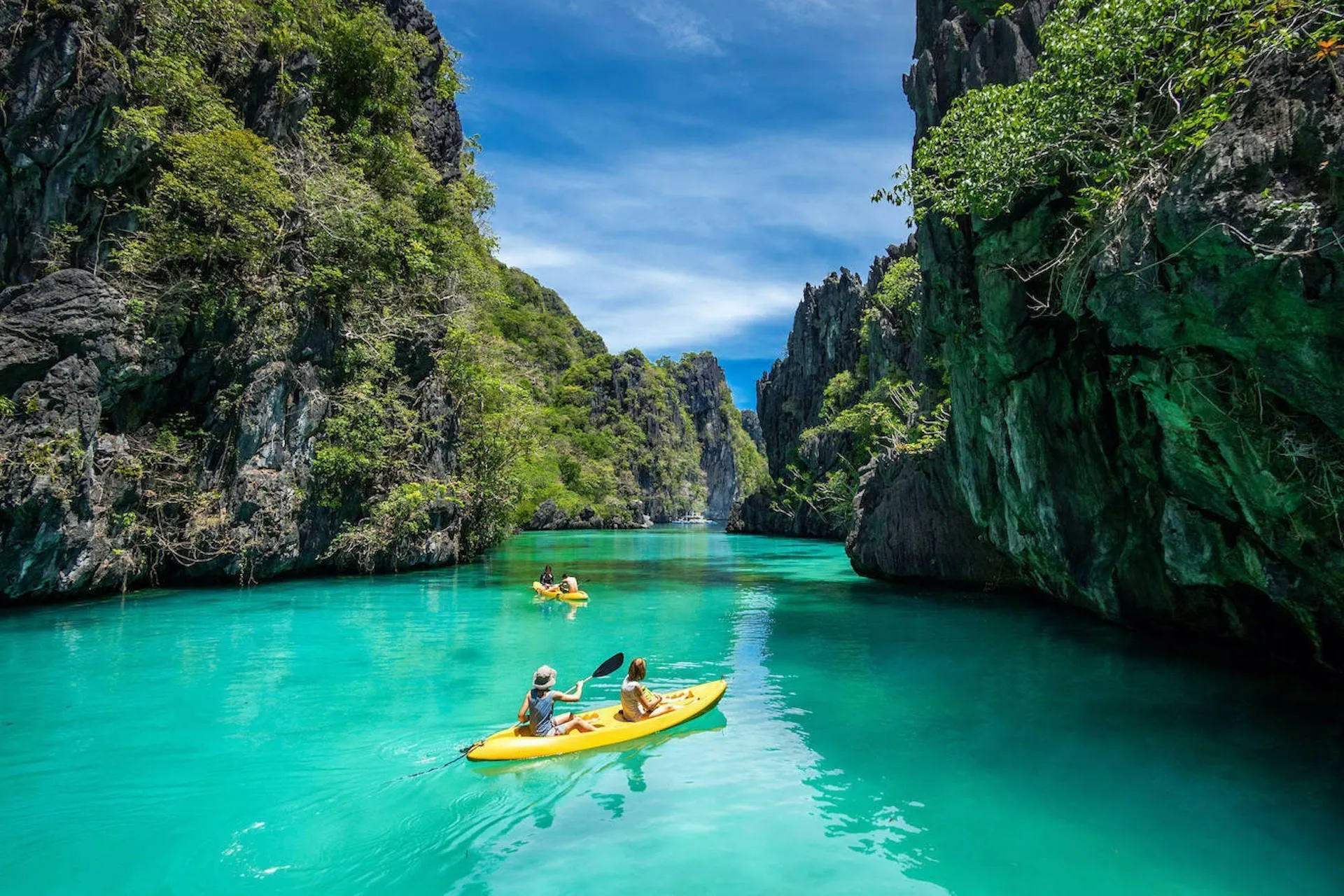
Tour A covers the Big Lagoon, Small Lagoon, Secret Lagoon, Shimizu Island, and Seven Commando Beach—lagoon kayaking and dramatic limestone scenery dominate. Tour C visits Helicopter Island, Matinloc Shrine, Secret Beach, Hidden Beach, and Talisay Beach—open-water snorkeling, fewer kayaks, and wider island views define the route. Tour A draws larger groups and fills earlier in peak season; Tour C runs quieter and offers clearer snorkel sites when swell is low.
Tour A became the signature El Nido route because it packs three lagoons into one itinerary—Big Lagoon's cathedral-like canyon, Small Lagoon's narrow kayak passage, and Secret Lagoon's hidden pool accessible only through a low rock opening at mid-tide. The limestone karsts rise vertically from jade water, and the sequence delivers the postcard imagery that defines Bacuit Bay. Shimizu Island adds a coral garden snorkel stop, and Seven Commando Beach closes the day with white sand and grilled lunch. The route works year-round because the lagoons sit sheltered inside the archipelago, protected from southwest monsoon swell. That reliability makes it the default recommendation from guesthouses and the first tour to sell out during Christmas, Easter, and summer school breaks. Tour C trades lagoons for open-water island hopping. Helicopter Island offers a long snorkel drift over healthy coral when visibility is high, Matinloc Shrine sits atop a bluff with panoramic views across the South China Sea, and Secret Beach requires swimming through a narrow rock crevice to reach an enclosed cove. Hidden Beach lies inside a limestone pocket accessible only by boat, and Talisay Beach provides the lunch anchorage. The snorkeling on Tour C consistently ranks better for fish density and coral cover, but the route depends on calm seas—when the wind picks up, operators cancel or reroute. El Nido island hopping tours operate on a shared-boat model, and Tour C boats typically carry smaller groups because fewer agencies prioritize it as their lead product. The practical decision hinges on what you want from six hours on the water. Tour A suits travelers who prioritize kayaking, limestone scenery, and the lagoons that appear in most Palawan travel content. Tour C appeals to snorkelers, swimmers comfortable in open water, and anyone seeking a quieter boat with fewer kayaks to queue for. Both routes require the same 400-peso eco-tourism fee, valid for ten days and checked at every island stop. Weather patterns shift between November and May—the dry northeast monsoon—when both tours run reliably, and June through October, when afternoon squalls and higher swell make Tour C more dependent on morning conditions. Shared boats for either tour depart between nine and nine-thirty, returning by four in the afternoon.
“Tour A packs three lagoons into one itinerary, while Tour C trades enclosed waters for open-sea snorkeling and fewer crowds.”
Choosing between Tour A and Tour C depends on whether you prefer exploring enclosed limestone lagoons or visiting open-sea islands with diverse marine life. Tour A centers on the iconic lagoons, while Tour C focuses on snorkeling and remote beach exploration.
| Tour A Lagoon Exploration Recommended | Tour C Open-Sea Snorkeling | |
|---|---|---|
| Primary Focus | Limestone lagoons and tranquil waters | Remote islands and reef snorkeling |
| Main Sights | Big Lagoon and Secret Lagoon | Hidden Beach and Matinloc Shrine |
| Snorkeling Quality | Moderate, focused on calm water swimming | High, featuring deeper reef systems |
| Lagoon Experience | Central focus with multiple lagoon entries | Minimal lagoon exposure |
| Crowd Levels | High traffic due to lagoon popularity | Moderate traffic across dispersed sites |
| Physical Activity Level | Moderate, involving swimming and kayaking | High, involving open-water snorkeling and boat transfers |
Verdict: Select Tour A if you prioritize the signature lagoon landscapes, or choose Tour C if you prefer superior snorkeling and a focus on rugged, open-sea beach environments.
Both tours follow a full-day shared-boat format, typically departing between 09:00 and 09:30 and returning by mid-afternoon. The itineraries visit four to five island stops, with sequencing adjusted by operators based on tide and weather.
Boats leave from the main beachfront or Corong-Corong area. Expect a 15–20 minute boarding process as crews load snorkeling gear and confirm passenger counts.
Tour A begins at Small Lagoon or Big Lagoon; Tour C opens with Helicopter Island or Matinloc Shrine. Each stop runs 45–60 minutes for swimming, kayaking, or snorkeling.
Tour A proceeds to Shimizu Island or 7 Commando Beach for coral viewing; Tour C moves to Hidden Beach or Secret Beach, accessible only by swimming through rock openings at low tide.
Crews serve a buffet-style lunch—grilled fish, rice, fresh fruit—on one of the tour's designated beach stops. Budget 60–75 minutes for the meal and a rest break.
Tour A wraps at Payong-Payong Beach; Tour C closes at Star Beach or Talisay Beach. Boats begin the return journey by 15:00.
Expect to dock by late afternoon, allowing time to rinse gear and settle any remaining fees with the operator.
The best arrival window for El Nido Tour A and Tour C is 09:00–09:30 to ensure timely departure for shared island hopping boats. Traveling during the dry season improves water visibility, which is essential for the lagoons and snorkeling sites featured in these tours.
Sunny, 25°C–32°C; calm seas for transit.
High visibility for swimming and snorkeling across all sites.
Rainy, 24°C–30°C; potential for sea swells.
Conditions can be unpredictable; boat schedules may experience interruptions.
—
Departing during the 09:00–09:30 window avoids the heaviest congestion at popular lagoons.
Verdict: Aim for weekday mornings between December and May for the most favorable sea conditions and clear water visibility.
Visitors to El Nido must account for the mandatory government fee in addition to private tour operator charges. All island hopping excursions in the region require this payment.
Verdict: Every visitor pays a 400 PHP fee for the Eco-Tourism Development permit, while total trip costs depend entirely on the specific tour operator selected.
Island hopping boats for both Tour A and Tour C operate daily throughout the week. These hours reflect the standard availability for coordinated maritime departures in El Nido.
Proper preparation for either island hopping route requires securing the right gear and documentation.
Everything you need to know about el nido tour a vs tour c
Tour A primarily focuses on lagoons and limestone cliffs, while Tour C is better known for its hidden beaches and snorkeling spots. Understanding el nido tour a vs tour c helps you align your day with whether you prefer calm water swimming or exploring rugged coastal coves. Both routes utilize motorized outrigger boats to navigate the Bacuit Archipelago.
Many visitors find Tour A more accessible due to the calmer lagoons and shorter travel distances between stops. While both options offer beautiful scenery, the gentle nature of the lagoons in Tour A often makes it the preferred starting point for first-time visitors. Researching el nido tour a vs tour c helps ensure your comfort level matches the destination activities.
While tour operators set their own package rates, all visitors must pay the mandatory government-regulated environmental fee. This fee is separate from any boat booking costs and covers the entire region for your trip duration. Always verify that your chosen provider includes the necessary permits to access these protected areas.
Tour A tends to be a more relaxed day trip with focused lagoon visits, whereas Tour C involves more time spent on the water between islands. Your preference for beach time versus lagoon exploration should dictate your final selection. Most travelers find that comparing el nido tour a vs tour c is the best way to determine which sequence fits their vacation pace.
Yes, every visitor to El Nido must pay the Eco-Tourism Development Fee of 400 PHP. This mandatory payment is valid for 10 days and is required for all island hopping activities. You should keep your receipt handy as authorities may verify it at various checkpoints.
Both tours are generally family-friendly, provided children are comfortable with swimming and wearing life vests. Tour A is often recommended for families because the lagoons provide sheltered, shallow water environments. Always inform your boat captain of any young children in your group when planning your el nido tour a vs tour c itinerary.
Essential items include a dry bag, sunscreen, a high-quality snorkel mask, and plenty of drinking water. You should also bring your receipt for the environmental fee and a waterproof camera to capture the marine life. Regardless of the route, ensure you are prepared for a full day of sun and saltwater exposure.
El Nido Island Hopping Tour A Packages
Read more GuideEl Nido Island Hopping Tours Explained
Read more GuideTravel from El Nido to Puerto Princesa
Read more Tickets & toursEl Nido Tour A Price & Booking
Read more GuideEl Nido Tour A Itinerary & Stops
Read more Tickets & toursPrivate El Nido Tour A Charter
Read more